Divergent
Veronica Roth
Katherine Tegen Books
2011
Usually, I try to review books within two weeks of reading them. Though I finished this book back in March, it's so awesome, I'm going to review it anyway.
I know I'm not the first person to make this comparison, but whatever: Divergent is the next Hunger Games. Only, in Suzannian (my little made up world), it's just a little bit cooler because 1) it takes place in Chicago and that's my second home and 2) there's a character named Tobias and I heart German names.
Tris (formerly Beatrice) lives in a futuristic world where there are five factions. Each of the factions lives life based on one single virtue: bravery, peace, selflessness, intelligence or honesty. At age sixteen, each child takes a test that reveals which faction, or virtue, fits them the best. Only Tris's test results come back inconclusive, or divergent. So she must choose which faction she wants to spend the rest of her life with. She grew up Abnegation (selfless), but has chosen to switch factions and join Dauntless (bravery). But life in the world of the brave isn't all it's cut out to be.
I loved this book because Roth has, much like Collins, taken a life theme (virtues) and given it a twist that causes us to see it in a completely different light. With Hunger Games we looked at reality TV and what it could become. In Divergent we look at values/virtues and see what they could become. What would the world really look like if we shaped our lives entirely around one virtue? And which would be worth shaping our lives around? Honesty? Knowledge? Peace?
Roth also looks at these values/virtues in terms of society and jobs. The members of the Dauntless faction (bravery) are the ones who guard the city, suggesting that the most important trait/virtue for a soldier/police officer is bravery. But is that the most important trait? What about intelligence, or selflessness?
In any case, Divergent is a book that will stay with you long after you finish it. I would highly recommend this book to middle and high school students, their parents, their grandparents, and anyone who loved Katniss, Peeta* and Gale.
*Side note: when the Hunger Games movie came out, people combined the two main characters names to create Peenis (not appropriate, but kind of funny). If you combined the two characters from Divergent, you'd get Fourtris (fortress). Freakin' awesome.
A quasi-pointless blog of the books I recommend (and some I don't) and my life as a library ninja.
Showing posts with label ALA award winner. Show all posts
30 April 2012
10 February 2012
Shiver by Maggie Stiefvater
Shiver
Scholastic Press
2009
Two apologies to start off this review:
1. I'm WAY behind the times in reading this book. And for that, I'm sorry.
2. Dear Maggie Stiefvater: I'm sorry I read this book when I did. I know you've written a great novel (er, trilogy), and I should have read this book years ago. Any book that followed the high of Daughter was bound to get a meh reaction. That’s just the way things are. But I'm still a little sorry.
With Shiver Stiefvater has taken the “forbidden love” plotline and threw a big, rather hairy, wrench into it. Grace and Sam have always admired one another, but from afar. Grace has always admired Sam from her kitchen window, and Sam admired Grace when she came into the bookstore where he worked during the summer. So why don’t the two just talk to each other? Because Sam isn’t a typical teenager: he’s a werewolf. When the weather gets cold enough, he turns into a wolf and stays that way until the weather warms enough that he can turn back into a human. In their small town of Mercy Falls, MN, there has been lots of wolf activity recently – a student was mauled and killed by the wolves. When a hunting party shoots Sam, he is able to turn himself into a human and luckily Grace is there to save him. Finally united in their human form, Sam and Grace make the best of the time they have together while trying to find a cure AND save the town from Jack, the oh-wait-he-didn’t-actually-die new werewolf in town.
Being a non-fan (antifan?) of the romance genre for the most part, I thought I was destined to dislike this book. It sounded Jacob-gets-Bella-esque from the description, so I was leery. However, the super creative twist (think Ladyhawke only sans Ferris Bueller, and for teenagers) made it completely readable to us Nicholas-Sparks-loathers. I will say that the plot dragged a little for me, and there were times when Grace and Sam were gazing deep into one another’s eyes and I kind of hoped for a wolf to jump out and bite them, but again, I blame the timing. I’m pretty sure if I’d read this book in the fall, or even six months from now, things would be different. But I digress. In general, it was a pretty good read. I can absolutely see the teen attraction, and the last chapter or so hooked me. I would love to say I’m going to read the rest of the trilogy: Linger and Forever, but unfortunately, I just don’t have time. The pile of books-to-be-read grows daily, so I rarely read sequels (Laini Taylor, if you’re reading this, that sentence does NOT apply to your books. Just sayin).
Regardless of whether or not I find out what happens to Grace, Sam, and all the other great characters from Mercy Falls, I would highly recommend (and already have, twice) this book to just about any teenage girl who loved Twilight.
1. I'm WAY behind the times in reading this book. And for that, I'm sorry.
2. Dear Maggie Stiefvater: I'm sorry I read this book when I did. I know you've written a great novel (er, trilogy), and I should have read this book years ago. Any book that followed the high of Daughter was bound to get a meh reaction. That’s just the way things are. But I'm still a little sorry.
With Shiver Stiefvater has taken the “forbidden love” plotline and threw a big, rather hairy, wrench into it. Grace and Sam have always admired one another, but from afar. Grace has always admired Sam from her kitchen window, and Sam admired Grace when she came into the bookstore where he worked during the summer. So why don’t the two just talk to each other? Because Sam isn’t a typical teenager: he’s a werewolf. When the weather gets cold enough, he turns into a wolf and stays that way until the weather warms enough that he can turn back into a human. In their small town of Mercy Falls, MN, there has been lots of wolf activity recently – a student was mauled and killed by the wolves. When a hunting party shoots Sam, he is able to turn himself into a human and luckily Grace is there to save him. Finally united in their human form, Sam and Grace make the best of the time they have together while trying to find a cure AND save the town from Jack, the oh-wait-he-didn’t-actually-die new werewolf in town.
Being a non-fan (antifan?) of the romance genre for the most part, I thought I was destined to dislike this book. It sounded Jacob-gets-Bella-esque from the description, so I was leery. However, the super creative twist (think Ladyhawke only sans Ferris Bueller, and for teenagers) made it completely readable to us Nicholas-Sparks-loathers. I will say that the plot dragged a little for me, and there were times when Grace and Sam were gazing deep into one another’s eyes and I kind of hoped for a wolf to jump out and bite them, but again, I blame the timing. I’m pretty sure if I’d read this book in the fall, or even six months from now, things would be different. But I digress. In general, it was a pretty good read. I can absolutely see the teen attraction, and the last chapter or so hooked me. I would love to say I’m going to read the rest of the trilogy: Linger and Forever, but unfortunately, I just don’t have time. The pile of books-to-be-read grows daily, so I rarely read sequels (Laini Taylor, if you’re reading this, that sentence does NOT apply to your books. Just sayin).
Regardless of whether or not I find out what happens to Grace, Sam, and all the other great characters from Mercy Falls, I would highly recommend (and already have, twice) this book to just about any teenage girl who loved Twilight.
16 December 2011
Trapped by Michael Northrop
Trapped
Michael Northrop
Scholastic Press
2011
Michael Northrop
Scholastic Press
2011
It’s winter, it’s cold, and it snows. Luckily where I live, it doesn’t snow too much (yes, I live in Colorado, but newsflash, the western side of Colorado is the desert), so we rarely get snow days (darn). When I lived in Chicago I always hoped for snow days, but in the four years I lived there, it just never happened. As a teacher, I love snow days. It’s the greatest feeling in the world – wake up, start getting ready for school and ring ring YES no school! I’ve never thought about the fact that a snow day could be bad.
Then I read Trapped by Michael Northrup and I realized a snow day could be bad. Especially if it meant I’d be stuck at school on a snow day.
Trapped takes place in New England – a place where monster snow storms are more common. And the storm that takes place in this book is the big one – the perfect snowstorm. The book starts out and it’s a regular day with snow expected. When the snow starts to fall harder and sooner than expected, school is released a little early so the students can get home. Of course, a few students and a teacher stay late – grading papers, working on projects, etc. By the time they decide to leave a few hours later, the snow is so bad, cars are no longer driving on the road and it looks like they’ll be stuck overnight. The next morning they wake up and it’s still snowing and it doesn’t look like it’s going to stop. They realize that no one is going to be coming for them anytime soon, so they make themselves comfortable – they raid the cafeteria for food and try to make the best of it. But when day three and four pass and the snow hasn’t stopped, no power and no sign of help coming, things get interesting.
I enjoyed the premise of the book, and I really enjoyed that it was told from a student’s point of view – for the first day or so, they aren’t worried because they’re at the age where they still rely on adults to take care of them. Once there are no adults to make the decisions, things get a little tricky. The characters are relatively true to “typical teenagers” – though I must say, they were pretty tame for teenagers. I liked this book, but it wasn’t really a page turner, and my reliable student reader Anna called it “a little kid-ish”. It has action, it has suspense, but it’s just a little…vanilla. Having said that, I liked that it wasn’t over-sensationalized – it’s definitely realistic fiction.
Though it didn’t make my top ten list of greatest books ever written in the history of the world, I would recommend it to some of the readers I have who don’t like fiction because it’s “fake”. I think those readers who enjoy reading books that are realistic and not dramatized at all would enjoy a book like this.
17 November 2011
Matched by Allie Condie
Matched
Allie Condie
(Allyson Braithwaite Condie)
Dutton Books
2010

Cassia is much like Bella in that she must choose between two “matches” that are both good for her – one is safer, one fits her better. She doesn’t want to hurt either of them, in fact she tries very hard to protect both of them. She’s also like Bella in that she doesn’t know her own strength (I know there are many people out there who would completely disagree with me that Bella is a very strong female character, but whatever, she is). The difference is that Cassia is taught and encouraged to be strong – by her society and her grandfather. Bella just doesn’t think or know how strong she is. However, the difference between Bella and Cassia is that Bella is drawn to Edward for reasons she doesn’t understand. The idea of Ky is put into her mind by the mixed up match.
Initially, the correlation between Cassia and Katniss was difficult for me to see. From the get-go Katniss knows that Panem is massively defective, and Panem is designed to keep people down. The Society in which Cassia lives tries to convince the citizens of its perfection and goodness. Katniss is a rebel from day one, whereas in Matched, Cassia fights against her initial feelings of rebellion and consistently tries to be a “good citizen”. However, as the book goes on, I can totally see the correlation between the two young women. Both understand that they are, more or less, pawns in their respective societies. Both are forced to put on “shows”, both are forced to do things in order to keep their loved ones safe, and both make choices that classify them as “rebels” simply because they want to protect others.
And now that I’ve compared the crap out of these three heroines, let’s just talk about Matched for a second. It really is an excellent YA novel. It has the action, internal struggle, rebellion and cute boys that are required of any good YA novel. It’s definitely a girl book – the romance plays too much a part in the story for most male readers to get into it.
Allie Condie
(Allyson Braithwaite Condie)
Dutton Books
2010

Kami Garcia and Margaret Stohl – the women who wrote Beautiful Creatures and Beautiful Darkness – claim that this book is “a brave new world that readers from Twilight to The Hunger Games will claim as their own” (from Matched book jacket). Now, I’m not sure if the words “a brave new world” are bolded to make reference to Aldus Huxley’s book, but if so, I have to whole heartedly disagree. This book is pretty darn good, but it is not, in any way, the “new” form of A Brave New World. However, it is a book that will appeal to both crowds that loved Twilight and The Hunger Games (the movie is on its way people! Get excited!!). In fact, I’d go as far as saying that Cassia really is Katniss stuck in Bella’s world…or...maybe the other way around.
Cassia lives in a world where all decisions are determined by “Officials” – where you will live, what job you will have, how much food you get, etc. The book starts out with Cassia attending her Match banquet – the celebration where she, and many other teens her age, will find out who they are to be “matched” with. Shockingly, Cassia is not only matched with someone she knows, she’s matched to her best and lifelong friend Xander. It’s very rare to be matched with someone you know. The next day when Cassia tries to view all the information about her match (even though she already knows him so well), something strange happens. She sees someone else. Someone else she knows. Ky lives in her neighborhood and she, Ky and Xander have grown up together and spend much of their recreation time together. Now she must figure out which of the two boys is her “true” match, and as she deals with her feelings for both boys, she learns that her perfect society is far from it.Cassia is much like Bella in that she must choose between two “matches” that are both good for her – one is safer, one fits her better. She doesn’t want to hurt either of them, in fact she tries very hard to protect both of them. She’s also like Bella in that she doesn’t know her own strength (I know there are many people out there who would completely disagree with me that Bella is a very strong female character, but whatever, she is). The difference is that Cassia is taught and encouraged to be strong – by her society and her grandfather. Bella just doesn’t think or know how strong she is. However, the difference between Bella and Cassia is that Bella is drawn to Edward for reasons she doesn’t understand. The idea of Ky is put into her mind by the mixed up match.
Initially, the correlation between Cassia and Katniss was difficult for me to see. From the get-go Katniss knows that Panem is massively defective, and Panem is designed to keep people down. The Society in which Cassia lives tries to convince the citizens of its perfection and goodness. Katniss is a rebel from day one, whereas in Matched, Cassia fights against her initial feelings of rebellion and consistently tries to be a “good citizen”. However, as the book goes on, I can totally see the correlation between the two young women. Both understand that they are, more or less, pawns in their respective societies. Both are forced to put on “shows”, both are forced to do things in order to keep their loved ones safe, and both make choices that classify them as “rebels” simply because they want to protect others.
And now that I’ve compared the crap out of these three heroines, let’s just talk about Matched for a second. It really is an excellent YA novel. It has the action, internal struggle, rebellion and cute boys that are required of any good YA novel. It’s definitely a girl book – the romance plays too much a part in the story for most male readers to get into it.
I don’t know that it will have the same adult-reader appeal that Hunger Games and Twilight did (though I still scratch my head at the adult appeal of Twilight. Yes, I’m an adult who loved it, but...hello…I’m a YA Librarian. It’s kinda my job). This might stem from my current state of the blahs about YA lit. However, I also think the romance-strand of the book is a little too teenage girl for adults to be able to identify with. Or, I might be a complete romantic cynic (probably). In any case, I look forward to purchasing the book for my school library, but won’t necessarily be passing it on to my adult friends.
16 November 2011
Hunger Games Movie Trailer
Oh holy lord. It's nearly here. Ok, so March is four months away, but whatEVER. I can't wait for this movie. And the cast? Wowza.
Ican'twaitIcan'twaitIcan'twaitIcan'twait.
Can you tell I'm excited?
26 September 2011
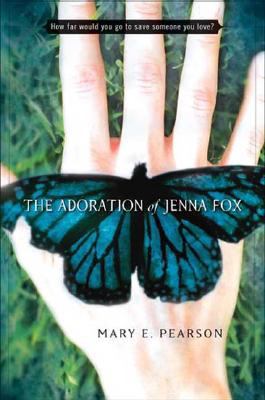
The Adoration of Jenna Fox by Mary E. Pearson
The Adoration of Jenna Fox
Mary E. Pearson
Henry Holt and Company
2008
As a librarian, I often have to read books because I'm not sure whether or not they'll be appropriate for the level of students I serve - whether because of reading level, content or interest. Sometimes I come across a book that I can't put down but I know my kids won't be interested in. Sometimes I read books that I find completely annoying, but as I read I can tick off the students who will go completely gaga over the story.
The Adoration of Jenna Fox is a bit of a mystery to me though, Intriguing story, pretty good plot line, acceptable ending, but, in my professional opinion, very blah. It's the story of a girl named Jenna who wakes from a coma after a terrible car accident that took place over a year ago. She can hardly remember her life before the coma, but things come back to her in flashes. Her parents are loving and fiercly protective, but her grandmother is distant - Jenna can sense that grandma just doesn't like her. As the story unfolds, you find out just how much Jenna's parents adore her, and what lengths her dedicated mother and scientist father are willing to go to keep her safe and alive. Her parents have provided her with stalker-esque (can your parents stalk you?) videos for each year of her life in the hopes that it will help her remember. However, as she watches the videos, she realizes that things don't quite add up. First of all, a scar on her chin is missing, then she realizes that she's a few inches shorter than she was before the accident. As you can imagine, the teenager in Jenna starts to rebel and all hell breaks loose.
The premise of the book really is excellent - how much of a person must remain in order for it to be the same person. Is a soldier who loses his/her arms and legs in battle still a whole person? What if all that could be saved of a person is half their brain? A third of their brain? Would they still be the same person? The problem I have with the book is that, well, I can't explain it. It was just blah. Parts of the plot that were supposed to be mysterious ended up being confusing and/or weird, and the ending - you all know how I feel about weak endings. The end annoyed me. Talk about rainbows and unicorns. Sheesh.
So here's my dillema - and let's be honest, it's not really a dillema. A dilemma would be solving the health care crisis or the Middle Eastern Conflict. This is more of a "whiney moment". I'm not sure my students will like the book. According to the reviews students have loved this book for years - heck the second book in the series The Fox Inheritance just came out (don't get me started on that one. It is NOT on my reading list. Oi.), but no students names popped into my head as I was reading it, and I don't look forward to book talking it (though, there are lots of books that I can sell like candy to kids that I'm not a fan of. 'Tis one of my talents). To purchase or not to purchase, that is the question.
I wouldn't recommend this book to students younger than 7th grade, but I think the majority of middle school students can handle it. If you're looking for a quick read that is somewhat thought provoking, I'd recommend it, but don't expect literary grandeur.
Mary E. Pearson
Henry Holt and Company
2008
As a librarian, I often have to read books because I'm not sure whether or not they'll be appropriate for the level of students I serve - whether because of reading level, content or interest. Sometimes I come across a book that I can't put down but I know my kids won't be interested in. Sometimes I read books that I find completely annoying, but as I read I can tick off the students who will go completely gaga over the story.
The Adoration of Jenna Fox is a bit of a mystery to me though, Intriguing story, pretty good plot line, acceptable ending, but, in my professional opinion, very blah. It's the story of a girl named Jenna who wakes from a coma after a terrible car accident that took place over a year ago. She can hardly remember her life before the coma, but things come back to her in flashes. Her parents are loving and fiercly protective, but her grandmother is distant - Jenna can sense that grandma just doesn't like her. As the story unfolds, you find out just how much Jenna's parents adore her, and what lengths her dedicated mother and scientist father are willing to go to keep her safe and alive. Her parents have provided her with stalker-esque (can your parents stalk you?) videos for each year of her life in the hopes that it will help her remember. However, as she watches the videos, she realizes that things don't quite add up. First of all, a scar on her chin is missing, then she realizes that she's a few inches shorter than she was before the accident. As you can imagine, the teenager in Jenna starts to rebel and all hell breaks loose.
The premise of the book really is excellent - how much of a person must remain in order for it to be the same person. Is a soldier who loses his/her arms and legs in battle still a whole person? What if all that could be saved of a person is half their brain? A third of their brain? Would they still be the same person? The problem I have with the book is that, well, I can't explain it. It was just blah. Parts of the plot that were supposed to be mysterious ended up being confusing and/or weird, and the ending - you all know how I feel about weak endings. The end annoyed me. Talk about rainbows and unicorns. Sheesh.
So here's my dillema - and let's be honest, it's not really a dillema. A dilemma would be solving the health care crisis or the Middle Eastern Conflict. This is more of a "whiney moment". I'm not sure my students will like the book. According to the reviews students have loved this book for years - heck the second book in the series The Fox Inheritance just came out (don't get me started on that one. It is NOT on my reading list. Oi.), but no students names popped into my head as I was reading it, and I don't look forward to book talking it (though, there are lots of books that I can sell like candy to kids that I'm not a fan of. 'Tis one of my talents). To purchase or not to purchase, that is the question.
I wouldn't recommend this book to students younger than 7th grade, but I think the majority of middle school students can handle it. If you're looking for a quick read that is somewhat thought provoking, I'd recommend it, but don't expect literary grandeur.
28 July 2011
Blood on My Hands by Todd Strasser
Blood on my Hands
Todd Strasser
2010
Once again, Karol Sacca was right on with a recommendation. This was a darn good book, and I can totally see why teens would be all over it. In fact, I can see this book being made into a movie it's so good. Imagine Mean Girls meets Carrie...kinda.
The book opens with Callie standing over the body of Katherine - top school mean girl - holding the bloody knife. *Click* people start taking pictures with their cell phones. "You killed her!" Shouts someone. The only problem is that Callie didn't actually kill Katherine. But now that there are pictures and accusations, Callie knows no one will believe her, so she hides. While she's hiding she tries to figure out who really did kill Katherine and why they would want frame her. And the ending is totally unexpected! And you all know how much I hate obvious endings.
What I really liked about this book is that it's actually plausable. Most books about teens and murder are completely unrealistic (I'm thinking of Blank Confession by Pete Hautman). That isn't to say that such books are not great reads - it's just rare that you come across one where a teenager is able to hide out for days without getting caught, the mistakes and motives are believeable, and the ending is both shocking and excellent. Strasser did a great job of making Callie's story believeable, and kept just enough details from the reader so that the ending make sense but isn't obvious.
Not only could I not put the book down, I let out a little yelp this afternoon when, while reading the book, my boyfriend's cell phone went off unexpectedly. That? Is the sign of a good book and an engrossed reader.
Might want to check out these reviews as well:
From a student at Dowling Catholic High School in West Des Moines, IA:
http://youngadultbookreviews.com/2010/11/09/blood-on-my-hands-by-todd-strasser/
A great synopsis from ReadingJunky's Reading Roost:
http://readingjunky.blogspot.com/2010/12/blood-on-my-hands-by-todd-strasser.html
Todd Strasser
2010
Once again, Karol Sacca was right on with a recommendation. This was a darn good book, and I can totally see why teens would be all over it. In fact, I can see this book being made into a movie it's so good. Imagine Mean Girls meets Carrie...kinda.What I really liked about this book is that it's actually plausable. Most books about teens and murder are completely unrealistic (I'm thinking of Blank Confession by Pete Hautman). That isn't to say that such books are not great reads - it's just rare that you come across one where a teenager is able to hide out for days without getting caught, the mistakes and motives are believeable, and the ending is both shocking and excellent. Strasser did a great job of making Callie's story believeable, and kept just enough details from the reader so that the ending make sense but isn't obvious.
Not only could I not put the book down, I let out a little yelp this afternoon when, while reading the book, my boyfriend's cell phone went off unexpectedly. That? Is the sign of a good book and an engrossed reader.
Might want to check out these reviews as well:
From a student at Dowling Catholic High School in West Des Moines, IA:
http://youngadultbookreviews.com/2010/11/09/blood-on-my-hands-by-todd-strasser/
A great synopsis from ReadingJunky's Reading Roost:
http://readingjunky.blogspot.com/2010/12/blood-on-my-hands-by-todd-strasser.html
17 July 2011
The Freak Observer by Blythe Woolston
The Freak Observer
Truth be told, I’m not exactly sure how I feel about this book. When I finshed it, I thought “hmm...that was a good book”, but when I sat down to write this review, I can’t really say what it was about the book that I liked. Most of the time I just found the main character, Loa to be sort of blah. Blah about her life, blah about the death of her sister, blah about the death of her friend, and blah about where things were going for her. But it’s possible that the reason I liked the book is because it wasn’t an over the top book. It was a book that was honest about every day life without having a huge, over the top storyline to it. No vampires, no Necromancers, just ordinary life and the good and bad that comes along with being ordinary.
Loa Lingren isn’t what you would call a stand out personality. In fact, because she has spent the last few years helping her parents raise her handicapped sister Asta, she has had very little social life. When Asta dies, Loa experiences an odd form of PTSD – she sees death coming for her or has vivid flashbacks of her friend dying every time she goes to sleep. So instead of sleeping, she does everything she can to stay awake. And her parents aren’t in any better shape than she is. The book follows Loa as she tries to figure out who she is without Asta.
As I said, it's hard for me to define what I liked about the book. But maybe I liked the fact that Loa was so blah, because after going through everything she did, being blah was the safest response Loa could have. Loa is real, and while her situation might not be average/every day, her reactions to trauma are normal (I think). I'm sure that we have all experienced traumatic events in our lives that cause us to respond to the world in a very blah manner. And I appreciate that Woolston didn't turn Loa's disasterous life into an after-school-special-esque book. Because let's face it, life is not an after school special, and it's nice to read books every once in a while that help us remember that and validate our feelings of loss and confusion after a trauma*. I'm positive there are people, teenagers especially, who will read The Freak Observer and relate to Loa and her blah-ness. And being able to relate to a character - fictional or not - will help with the healing process.
*Having said that, I'd like to add that it's also really nice to read books that are after-school-special-esque too. Sometimes we need the hope of a picture perfect ending complete with smiles and group hugs.
28 June 2011
Hold Me Closer, Necromancer by Lish McBride
Hold Me Closer Necromancer
Sherman Alexie (on of my favs) is quoted on the cover of this book saying “This is a SCARY funny book OR a FUNNY scary book. In either case, it is a GREAT book.” Dude totally nailed it. I could not put this book down, which, honestly doesn’t say much because I rarely put books down. In fact, in the future, just know that if I could put the book down, it probably wasn’t that great.
Sam (Samhain) is your typical floundering young man – I think he’s about 20 – working at the local grease pit. He finds out through a series of extremely confusing events, including being man-handled by a werewolf and having one of his good friends murdered and her head reincarnated (how can a book be bad with a talking un-dead best friend head?), he finds out that he is a Necromancer, or a magical person able to control the dead. Unfortunately, the head Necromancer in town, Douglas Montgomery, is not a fan of competition. He kidnaps Sam and forces him to become his apprentice. Sam has to figure out how to escape and how to help the super hot were-girl Douglas is also keeping captive in his basement. I could give you more of the storyline (there’s WAY more), but not knowing will make it just as fun to read. In fact, I picked the book up having been given a completely different description.
This book is perfect for just about anyone – those of us who love fantasy but are really tired of vampire books, anyone who likes scary/paranormal books, or a high school student who likes a laugh-out loud page turner. Unfortunately for this middle school librarian, it is not appropriate for middle grade students (my favourite line – “So you’re the guy who did the no-no cha-cha with my baby sister”). So if you are over 15 years old and enjoy books, you should put this book on your reading list!
09 June 2011
Swim the Fly by Don Calame
Swim the Fly
Here are the two short reviews I heard about this book. First: this book is a must read for all teenage boys. They love it! Second: I seriously almost wet myself laughing. Since I find that most realistic fiction isn’t geared toward young male readers, and since I quite enjoy laughing myself silly (all urination aside), when I saw Swim the Fly on the shelf at Central High School, I immediately grabbed it and asked to check it out (much to the chagrin of Shar, their library secretary. Guess it was on her reading list too).
Swim the Fly has actually nothing to do with flies. I was a little confused by the title until I realized that “the fly” is a swimming term…I know, I’m not very smart. Matt Gratton is, well, a wimp, but he is a dedicated member of his local swim team, and when he sees an opportunity to impress the über-hot Kelly, he volunteers to swim the 100m butterfly (should that be capitalized? See, I know nothing of swimming). The beginning of Matt’s problems is the fact that he really can’t swim the fly. At all. The good thing about this book is it really isn’t about swimming “the fly”, it’s about the summer adventures (and embarrassments) of a teenage boy who has two really great friends, uncontrollable hormones, and not the slightest clue about girls.
I loved this book. It was hilarious. Some of the situations Matt finds himself in are painfully funny – for example, drinking an extra dose of protein shake that turns out to be fiber laxative (totally not a spoiler, you kinda see it coming). My tummy actually hurt thinking about it. The best part is every crazy situation Matt gets himself into, I can totally imagine one or more of my former “super smart” students getting into. It’s almost like the time I went to see SuperBad with some of my co-workers and we spent the entire movie laughing, not because it was funny (though it was) but because we kept naming students we could see trying to pull those kinds of pranks.
However, I will say that I’m not completely sold that this book is a “guy read”. I actually think it’s more of a chick read about how guys think. But I’m not sure – I don’t know any guys who have read it. It won’t ever be in the collection at GMMS because it’s not middle school appropriate, so I’m not sure I’ll be able to find a guy to read it. I thought about asking my dad, who loves to read, but I’m pretty sure it’s not his cup of tea. He’d think it was funny, but anyone who loves Motherless Brooklyn by Jonathan Lethem is kind of on a different level.
Regardless, I’d recommend this book to anyone looking for a light, fun summer read. And if you happen to be a teenage boy (wow, this sentence TOTALLY started out creepy) let me know what you think!
18 May 2011
Hereville: how Mirka Got Her Sword by Barry Deutsch
Hereville: How Mirka Got Her Sword
Amulet Books
2010
I swear I did not seek this book out based on my love and adoration for the book Hush. I swear on everything holy. It just happens to be another book about an Orthodox Jewish girl. This one, however, has the imagination that rivals J. K. Rowling. And it’s an award winning graphic novel (it was named one of the 2011 Great Graphic Novels for Teens).
Mirka lives in Hereville – an Orthodox Jewish community – with her family: her father, her stepmother and her many siblings. She has an amazing imagination and has always dreamed of fighting monsters – she even hides a book about monsters under her bed (because they live in an Orthodox community, they aren’t supposed to have or read non-Jewish books). One day when she gets lost on the way to school, she comes across a peculiar house and sees a witch and angers a very large talking pig. The pig starts to follow her and steal her homework, knocking her over and creating havoc in her world. When she continually tells people that it’s the pig’s fault, no one believes her. She devises a plan to get the pig to leave her alone only to have to save the pig shortly thereafter. The witch appears and offers her a reward, which sends her on a quest to fight and defeat a troll. The only person who can help her fight the troll is her stepmother, Fruma, a woman Mirka adores and fears all at once.
While I found the story extremely entertaining, I don’t know that students will be as drawn to it as I was. I’ve tried finding out as much as I can about the author because I’m curious as to what would make him write a book about Orthodox Jews. But I couldn’t make the connection – he doesn’t mention being Jewish and doesn’t look Orthodox. He is, however terribly funny and extremely sarcastic – something that I enjoy, but I’m not sure students will identify with. I think Deutsch intends to portray Orthodox Jewish customs respectfully, but it comes across as challenging if not a bit judgmental. Maybe he simply intends to get people thinking about the customs in their own personal “Hereville”. Whatever his intention, I don’t know that it will come across to middle and high school students. I think they might miss the subtlety, and I definitely think they will be turned off by all of the un-translated Yiddish phrases. If he’d included a glossary at the end so that people would know why Zindel says talking to Mirka is like “red tsu der vant” (red’ zu der Wand or talking to the wall). The only reason I enjoyed some of his jokes is because I speak German and could figure out the Yiddish.
I can see why reviewers loved the book; I’m just not convinced that reviewer enjoyment will translate to student enjoyment. But that’s the joy of books – ten people read a book and you get ten different opinions!
Here are some other reviews of Hereville:
10 May 2011
The Radleys by Matt Haig
The Radley’s
So I’ll be the first to say, vampire are sooo last week. Twilight, the Chronicles of Vladimir Tod, and the House of Night are the books that started it all, and now we have TV series like Vampire Diaries and True Blood (does anyone remember the original vampire series – Buffy the Vampire Slayer? Can I get a heck yeah?). When I first read about The Radleys on the Alex Award List, I thought “ugh…not again”. But then I read the jacket and I was intrigued. Behold, the power of a well written book jacket!
The Radleys is the story of a small town family of vampires, only they aren’t your normal vampires (but when, since Count Dracula, have we had a story of “normal” vampires) because of two things. The parents are abstaining vampires – they do not drink blood, and the children don’t know they are vampires. And in classic style, because the children don’t really know what they are, the book opens and both are struggling to figure out who they are. Rowan has a crush on a local girl, Eve, but lacks the confidence to even speak to her, and Clara is so desperate to get animals to like her that she is attempting to go vegan – a choice that, unbeknownst to her, could ultimately kill her. When Clara accidentally tastes human blood, her hereditary instincts take over and she accidentally kills someone. Now that the secret is out, all of the members of the Radley clan feel their lives turn upside down. Enter Uncle Will – the practicing vampire that can save them all. But there are more secrets hiding on Orchard Lane than one would expect.
I will not say that this is the greatest book I’ve ever read, but it definitely kept me turning the pages. And I can completely see why this book was chosen for an Alex Award – an award given to books written for adults that experience wide success as YA books. Haig created enough suspense that the reader wonders what will come next, and there are just enough plot twists to keep you on the edge of your seat. I had at least two *Gasp* moments, and I once said “OH NO” aloud – which wasn’t a good idea because I was reading…oops. Though this book may not make my favorite book list, I will say that Haig has definitely taken a somewhat overused genre – vampires – and taken it to a new place and written a great novel.
Here are some other reviews of this book:
23 March 2011
Revolution
Revolution
If you’re a history buff or a music buff, this is absolutely the book for you. Andi Alpers is a senior in high school who is holding her life together by a very thin thread. Her younger brother was tragically killed two years earlier and her family has since fallen apart. The only things that keep her going are caring for her mom, popping antidepressants and her music. Andi is a guitar aficionado. When her father finds out that she might not graduate from high school, he takes her to Paris for the three week Christmas vacation in an effort to get her to focus on her school work. In Paris, a family friend gives her a very old guitar and she finds a diary inside a secret compartment within the guitar case. The diary belonged to a girl named Alexandrine who was intimately involved with the French Revolution and the royal family. Andi becomes as obsessed with the diary and the story surrounding it.
I’ll be the first to admit I don’t like history. It was never my favorite class, and analyzing why these people were mean to those people has never been my thing. So when someone recommended that I read Revolution – a book basically about the French Revolution – I was skeptical. That and the music from Les Misérables kept running through my head. But the premise intrigued me, so I decided to give it a try. And I, like Andi, was completely swept up in the story and could not put the book down. The struggles Andi experiences in the book – her bitterness towards her father, her self-hatred for what happened to her brother, her desire to save her mother but lose herself – paired with the struggles Alexandrine faced are so real and poinient, the reader can’t help but get caught up in their lives. And Donnelly has some awesome lines: “What is it that mends broken people? Jesus? Chocolate? New shoes? (p 137), “Because after all the shattered hopes, after all the blood and death, we woke as if from a nightmare only to find that the ugly still are not beautiful and the dull still do not sparkle. That this one sings better than that one. And he got the position I wanted…And no writ, no bill, no law, nor declaration will ever change it” (p 286-287). Lines like these cause the reader to really think about the situations that Andi and Alexandrine found themselves in. I also loved that Donnelly provided a bibliography at the end, so if I were so inclined, I could continue my research on the French Revolution. And Donnelly did such an amazing job with this book, I just might have to.
05 March 2011
Heist Society
Heist Society
Disney/Hyperion 2010
Note: This is a book review I did for my Adolescent Literature class on Adventure novels. I thought it was good, so I decided to post it. That, and the book is darn good!
Heist Society by Ally Carter is the teenage girl version of The Thomas Crowne Affair. Kat Bishop has had enough of the world of thieves, so she leaves the family business and enrolls in a posh private school. However, the world of thieves isn’t quite done with her yet. When her father is framed for stealing some paintings from a very dangerous criminal, Kat and her band of teenage crook friends must recover the paintings and clear her father’s name. Heist Society is an excellent book about family ties, trust and one of the oldest trades: stealing. The plot is ironically over the top and completely believeable, with unexpected twists and turns that keeps the reader enthralled and guessing and leaves them shocked and begging for more.
Heist Society is, in every way, an excellent adventure story. The protagonist, Kat Bishop, is not only likeable, she and the other characters are excellently developed (Nilsen & Donelson, 184) – their back stories add to both the intrigue and depth of the story – and readers will be able to identify with Kat (Nilsen & Donelson, 184) and her desire to become who she wants, regardless of her family and her history. Though the setting and the plot are fantastic, the reader is drawn into them like movie goers were drawn into Ocean’s Eleven and National Treasure – even though the main characters are committing crimes and breaking dozens of laws, the reader wants them to succeed, if not just for the fun of the action, but for the deeper reason behind their action. All in all, this is an excellent book that will appeal to the adventurer in all of us.
Nilsen, A. P., & Donelson, K. L. (2009). Literature for today's young adults: Eighth Edition. Boston: Pearson Education.
02 March 2011
The Chosen One
The Chosen One
St. Martin’s Griffin, August 2010
When I think back to the decisions I had to make when I was not quite 14, I realize that I had it pretty good. All I had to worry about was making sure my shirt matched my pants and socks, whether or not I’d finished my homework, and how to get the cute boy (yep, that’s you Andy W.*) in my Language Arts class to notice me. Reading the story of Kyra – a girl growing up in a polygamist compound, completely shut off from the outside world, and betrothed by the “Prophet” to her 60+ year old uncle before she even reaches her 14th I am lucky that I was raised to think for myself – though I definitely could not have done so at the age of 13. birthday – made me realize how lucky I am.
In The Chosen One, we follow as Kyra struggles with her upbringing. On the one hand, she has her family – really three families blended together and headed by her very loving father who commits his time and his love to all of his children and his three wives. Kyra cannot imagine a life without them and knows that the quickest way to Heaven is to do what is best for them. On the other hand, she has the Ironton County Mobile Library that brings her forbidden books and a glimpse of the world on the outside, and Joshua Johnson, the boy who makes her feel alive and gives her meaning. When she finds out she is to be bound to her uncle, her world turns upside down and she begins to struggle with her two lives: honoring her family or loving Joshua, her faith and the words of her prophet or her books and her freedom.
In this absolutely gripping novel, Williams has created the perfect coming-of-age character. Kyra teeter-totters between a little girl who believes God knows everything she has done and will punish her for her sins, and a young woman who questions her faith – a faith that she has been raised never to question. And Williams also does a tremendous job of developing the other characters, especially the men in Kyra’s life: Prophet Childs, Patrick the book mobile driver, her father and her Uncle Hyrum – all the men who teach her what strength, courage and faith are.
All in all this book is stunning in it’s presentation of the subject matter and the journey Kyra takes as she – at the ripe old age of not-quite-fourteen – weighs and makes decisions that will affect her and those who love her forever.
This book was voted one of YALSA's 2010 Best Books for Young Adults
*for the record, Andy W. is still pretty darn cute, even with gray hair...
01 March 2011
They Called Themselves the KKK
They Called Themselves the KKK: The Birth of an American Terrorist Group
Having grown up in a time where race relations are markedly different than they were when my parents were my age, and having grown up in a place where the majority of the kids look like me (read: suburban white kids) I can’t say that I’ve had much contact or experience with the KKK – something I’m quite thankful for. In her book, They Call Themselves the KKK, Bartoletti presents a comprehensive history – well, as comprehensive as is possible. Because of the extremely secretive nature of the group, it is difficult to find information about the inner-workings of the club. The information is based on Bartoletti’s research of thousands of slave narratives, newspapers, reports and diaries of people affected by the Klan. While there is an obvious bias to the book, Bartoletti does an excellent job of showing the “white” side of the coin as well – after the signing of the Emancipation Proclamation, most wealthy plantation owners had nothing – their land had been ransacked by the Union Army, and their “property” had been taken away from them by people who lived far away and did not understand how things worked in the south. All of a sudden, they no longer had workers to sow and harvest their crops, and they had competition in the market from their former slaves. Bartoletti shows how the fear of losing their livelihood drove many whites to use propaganda and terror to try to maintain their power – and their way of life. She also shows how the former slaves refused to give up their newfound freedom and were willing to do everything they could to keep it. And lastly, she showcases the unfailing courage of many men and women – regardless of the color of their skin – in the face of the rising terror created by the KKK.
This book was a wonderful read, even though many of the images and descriptions gave me nightmares. Bartoletti not only gives a clear picture of the historical events surrounding the early years of the KKK, she also gives keen insight into the mindset of the various groups and their struggles during that time.
**This book was a finalist for the 2011 YALSA Award for Excellence in Nonfiction
22 February 2011
Crank
Crank
by Ellen Hopkins
by Ellen Hopkins
Honestly, I have been avoiding reading this book since it came out. I know how controversial it is, and I know how much kids love it and that it never stays on the shelf for more than about a day. In fact, I had to ILL request it from Eagle Valley just to get a copy to read. There are two reasons that I have been avoiding reading this book: first, I really don’t like books written in verse. I’ve never been much of a poetry person, so I always assumed I’d hate books written in verse. Second, I’m pretty much the quintessential good girl and have zero desire to do or try drugs (thank you Nancy Reagan, for teaching me to give hugs not drugs).
Now that I’ve read the book, I will say that I’m glad I read it. I can see the appeal in the book and in the format. And I do believe that the format of the book enhances the reading experience. Though I am a self-proclaimed goody two-shoes and have never been on drugs, I did consult an acquaintance that has dabbled in the world of illegal substances and asked him to read some of the book. He said that being under the influence was sometimes like the writing in the book – somewhat choppy and all over the place. And did anyone else notice the hidden messages in some of the poems? In many of the entries, the words that are set apart tell their own little story. Take, for example the entry “GUFN Again”. The words set apart on the left side read “I didn’t belong to my mom anymore”. Another example is “I Went Home”. Down the right side reads “Scott insisted, Chase invited, Brendan inflated, Leigh instigated, Mom finally noticed, Bree swore”.
Though, as I said before, I’m glad I read the book, I cannot say that I enjoyed it. Not only did I start dreaming weird, verse-like dreams about drugs, the book left me with a very icky feeling every time I picked it up. I suppose that’s a good thing –Hopkins doesn’t glamorize the drug (or glamorizes it as little as she can) in order to show the truth about drugs to readers. And I am the one who is very much against happy endings that are unrealistic, so the ending – which leads readers to believe that Kristina/Bree is/was unable to stay away from meth after her son was born – made me appreciate the book more. But I found it really difficult to relate to Kristina/Bree. When she talked about her life pre-drugs, she didn’t make it sound terrible or horrible, so I have trouble understanding how she was so willing to throw it all away. But then again, I suppose that’s one of the risks of drugs that kids should think about/know about before they even try it once. In any case, this book will not go on my list of favorite reads ever.
When it comes to books in verse, I’m not sure this book would be as effective if it weren’t written in verse. However, I was a little afraid that I’d associate all books written in verse with this book, so I read Shakespeare Bats Cleanup by Ronald Koertge (Candlewick Press, 2003) and I actually liked it. So I promise I won’t give up on books written in verse completely. However, I probably won’t read anymore Hopkins books…sorry.
Subscribe to:
Comments (Atom)